
Government
Ordinance to set up Gen Z movement commission stalls at Nepal President's office
A Cabinet-approved ordinance to form a commission to investigate, compensate and settle cases from the September 2025 Gen Z protests is awaiting action at President Ramchandra Paudel's office, where an official questioned the use of an ordinance on such a sensitive issue.
By Mero Nepal News · 27 Nov 2026
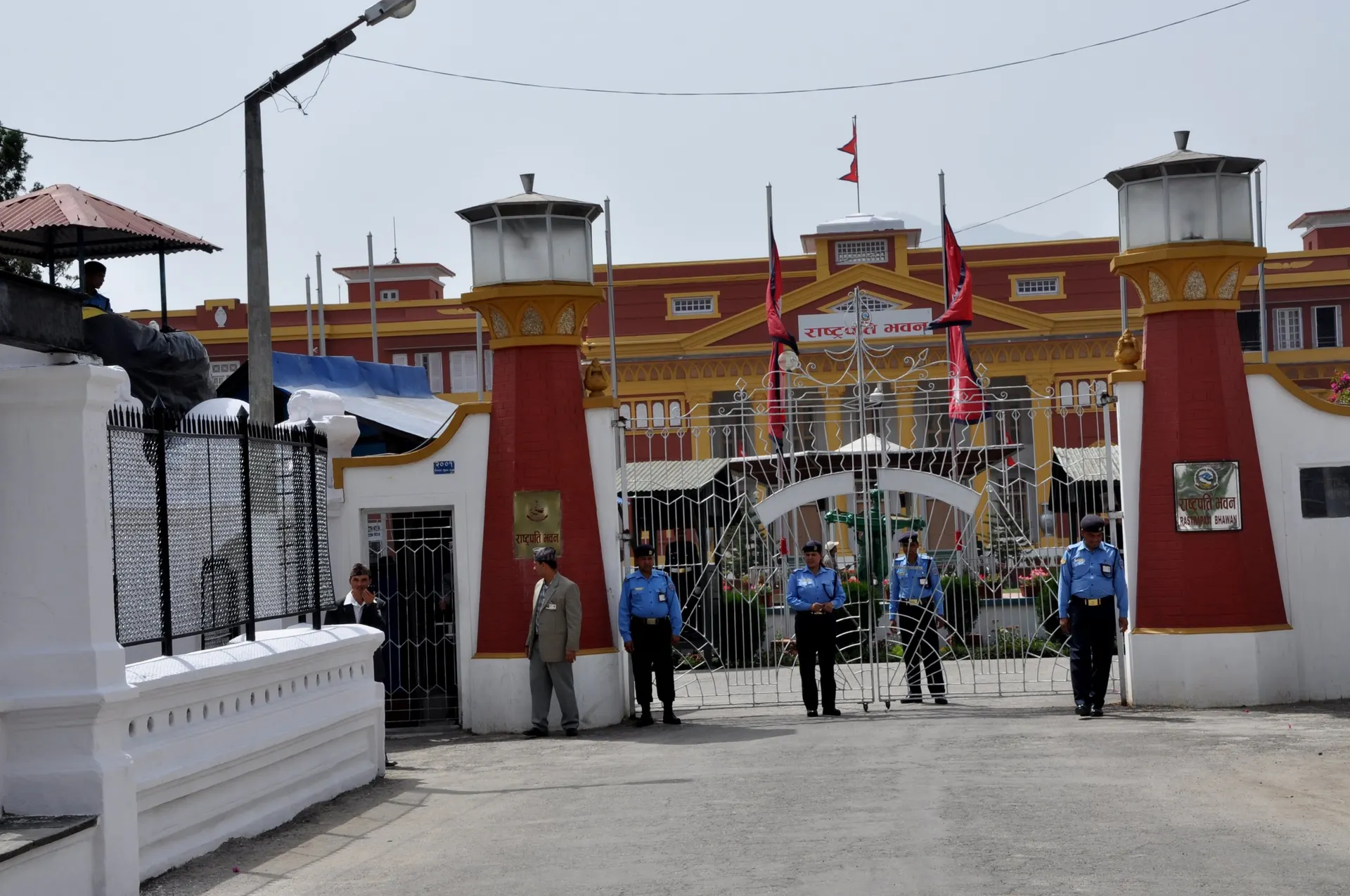
An ordinance to create a commission on incidents during Nepal's Gen Z movement is stuck at the office of President Ramchandra Paudel, the Kathmandu Post reported on Nov. 26, 2026.
The Cabinet approved the Ordinance on the Investigation, Compensation and Reparation Commission for Incidents in the Gen Z Movement on Nov. 20 and sent it to the president. An ordinance is a temporary law the president can issue on the Cabinet's recommendation while parliament is not in session. The draft was prepared by the Ministry of Home Affairs.
Senior advocate Baburam Kunwar, legal adviser to the president, confirmed that the ordinance reached Sheetal Niwas, the president's office, on Tuesday, Nov. 24.
"The ordinance to form a commission for the Gen Z movement incidents arrived on Tuesday. We need to sit and discuss it," Kunwar told the Kathmandu Post.
An official at the president's office, speaking to the newspaper on condition of anonymity, said: "Choosing the ordinance route for such a sensitive issue appears wrong. It will undergo serious study."
The Home Ministry had not commented.
Background
The ordinance is meant to implement a 10-point agreement signed on Dec. 10, 2025, between the government and leaders of the Gen Z movement, following the unrest of Sept. 8 and 9, 2025. Then prime minister Sushila Karki signed for the state, and Bhoj Bikram Thapa signed on behalf of the families of those killed and the injured.
What the ordinance proposes
According to the Kathmandu Post, the ordinance would set up a three-member commission with a three-month mandate that could be extended. The chair must be qualified to serve as a High Court judge. Members must be at least 35 years old, hold at least a bachelor's degree, have experience in human rights, law, conflict management or sociology, and must not be members of a political party.
The commission would gather protest-related cases from district courts, High Courts and the Supreme Court, as well as complaints under police investigation, and decide whether an incident falls under the Gen Z movement.
Cases other than grave offences could be settled through reconciliation, compensation or reparation, or by pardoning the defendant. For minor offences or damage to government or public property, files could be closed by pardon without compensation. Settled cases could not be retried, and the commission could order the release of people jailed in those cases.
Grave offences — defined as culpable homicide amounting to murder and planned theft using arms during the movement — would remain with the courts.
Compensation would cover physical harm and loss of government, public or private property. People who have already been compensated or are insured would not qualify. A fund would receive money from the government, domestic donors and foreign governments or agencies, subject to Finance Ministry approval.
Criticism
Former law minister and senior advocate Govinda Bandi said the government did not appear to have consulted enough, though the draft has not been made public.
"Any new commission must focus on finding the truth," Bandi said. He noted that a commission led by Gauri Bahadur Karki and the National Human Rights Commission have already investigated the events.
Other stalled ordinances
President Paudel has issued five other ordinances ahead of parliament's winter session. Three ordinances recommended by the Cabinet, including this one, are stalled at Sheetal Niwas.
The Kathmandu Post reports that relations between Prime Minister Balendra Shah and the president are strained and that there is no direct communication between them.